
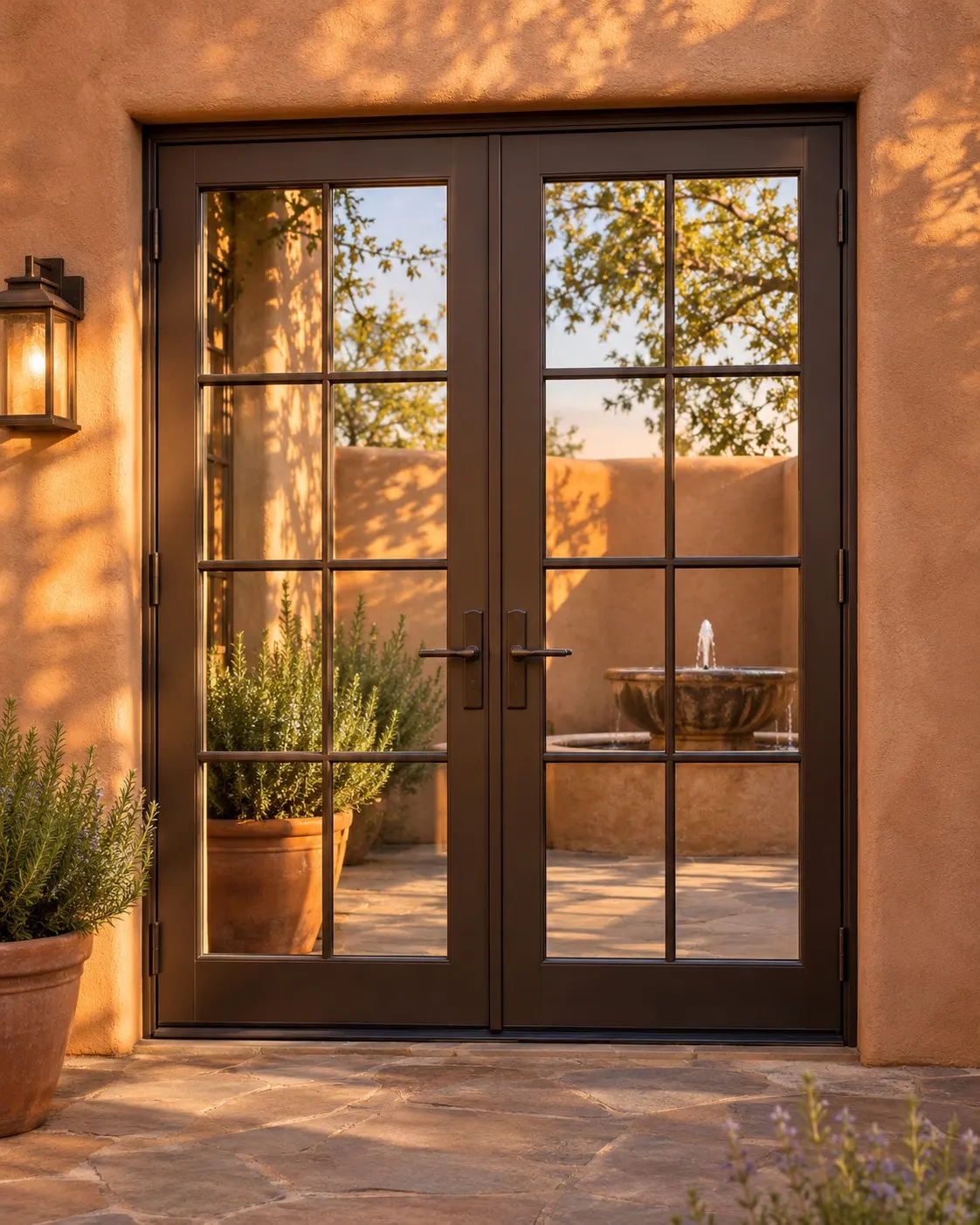
What a buck is
When an adobe, rammed earth or straw bale wall is built, a rectangular wood frame is set into the wall at each window and door opening. That frame is called a buck. The wall is built around it, and the window is later fastened into it. The buck spreads the load, provides something solid to attach the window to, and defines the opening.
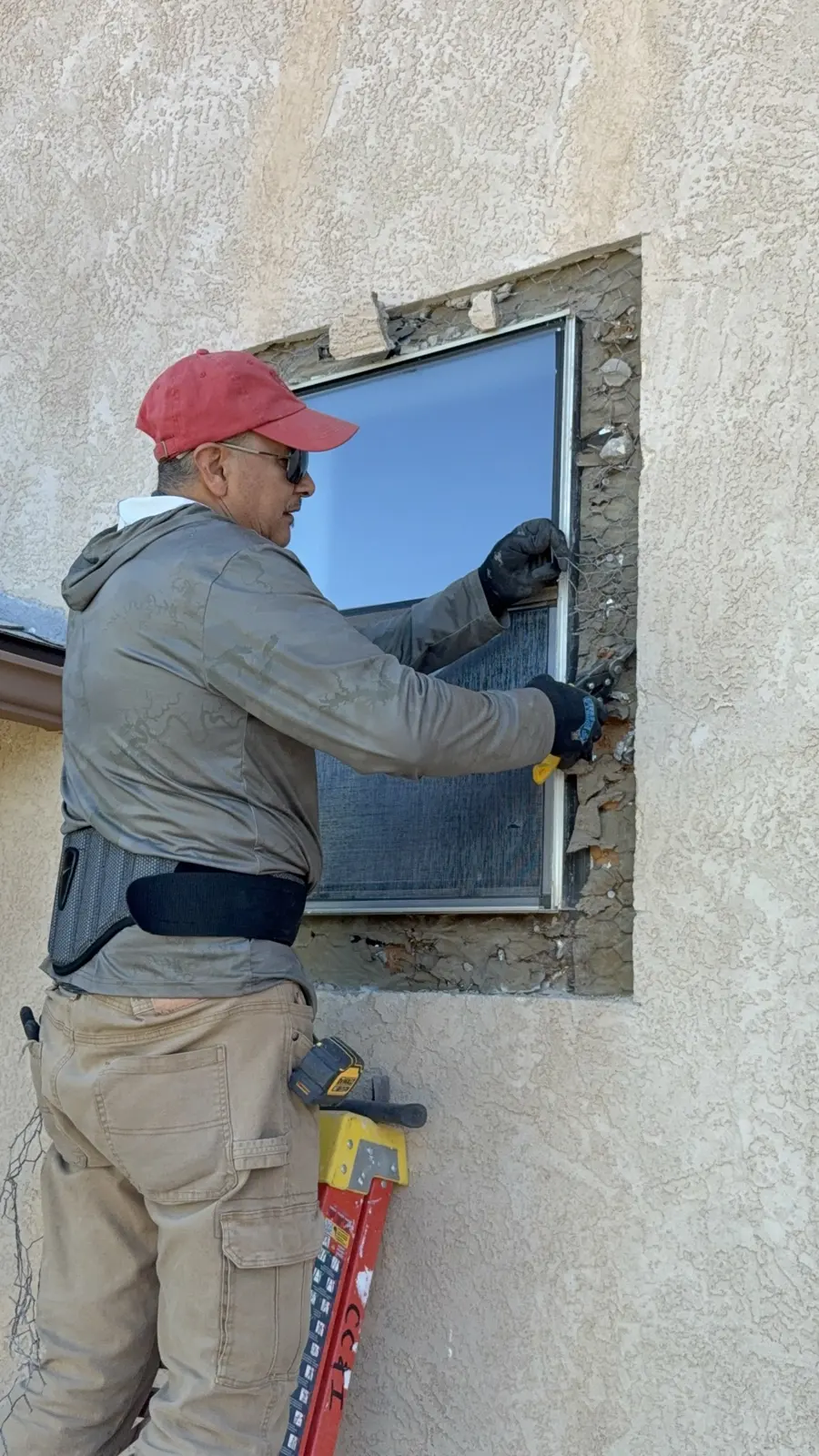
How bucks fail
- Water at the sill: rain or snowmelt running down the wall collects at the bottom of the buck. Over years, the wood softens and rots.
- Condensation: old single-pane windows drip condensation onto the inside sill, which can soak into the buck from the inside.
- Movement: earthen walls shift slightly over time, which can crack bucks or open gaps around them.
- Insects: damp wood attracts insects that weaken it further.
Signs to look for
Soft or dark wood at the bottom corners of the opening, cracked plaster around the window, gaps you can see light through, or a window that has started to sag or bind.
What happens during replacement
When we remove the old window, we inspect the buck. Sound bucks are cleaned and sealed. Damaged sections are cut out and replaced. Badly rotted bucks are rebuilt. Then the new window is set with sill protection and flashing that sheds water without trapping moisture against the wall. Earthen walls need to breathe.
Plan for it
Buck repair can't always be fully assessed until the old window is out. Our quotes note which openings are likely to need it, and if we find more damage than expected, we stop and show you before going further.
Questions we hear about this
Can a rotted buck be repaired without rebuilding the whole opening?
Often, yes. Damaged sections can be cut out and replaced. Severe rot may require rebuilding the buck.
Do straw bale homes have bucks too?
Usually, yes. Straw bale walls typically use wood bucks at windows and doors, much like adobe.