
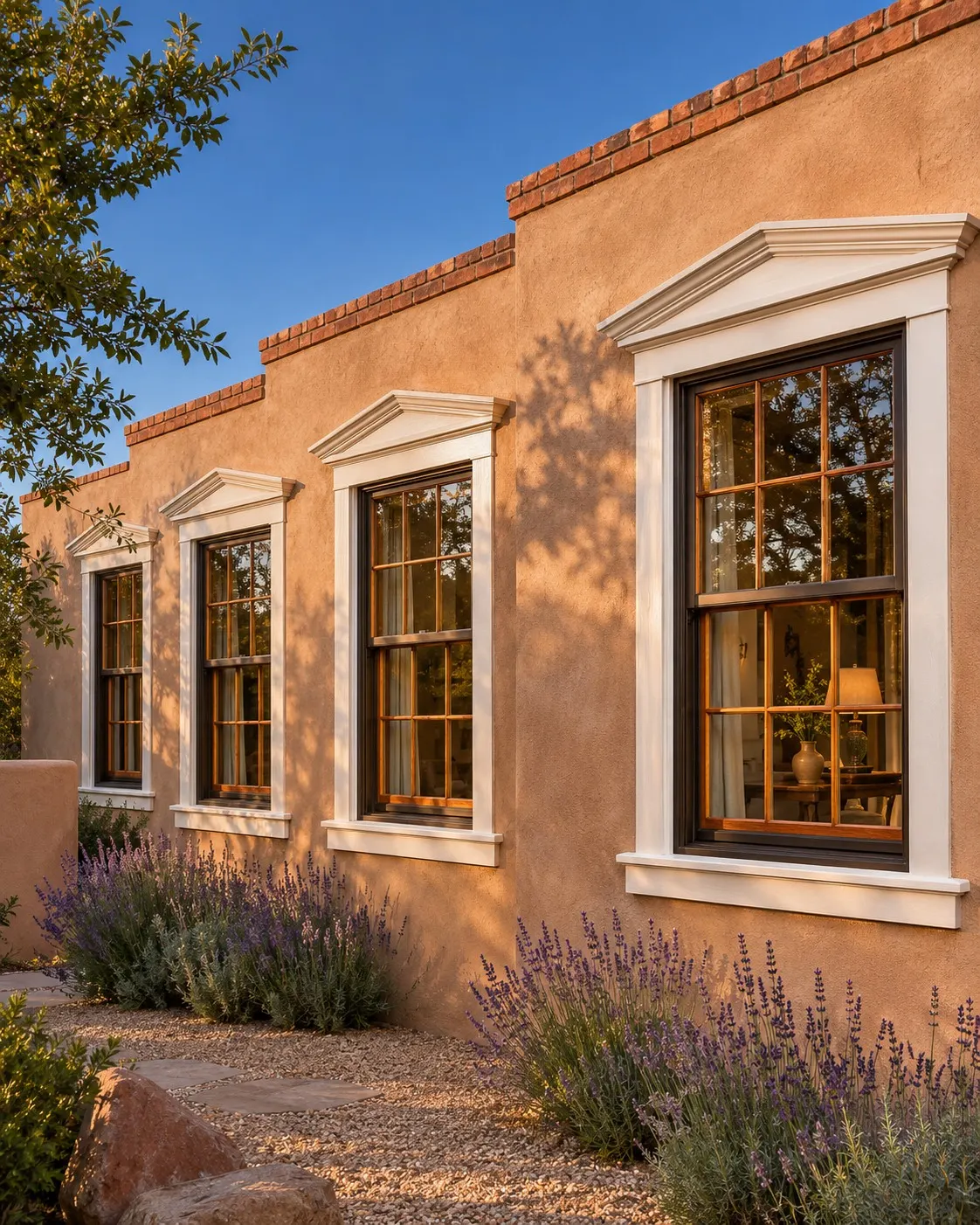
The tradeoff
Coatings that block the most solar heat sometimes also reduce visible light or add a tint or mirror-like reflection. On a west-facing view window, you want to block as much heat as possible while keeping the view bright and true. That means looking at more than one number.
The numbers to compare
- SHGC (solar heat gain coefficient): lower blocks more heat.
- VT (visible transmittance): higher lets in more daylight and looks clearer.
- LSG (light-to-solar-gain ratio): VT divided by SHGC. Higher means the glass is better at letting light in while keeping heat out.
For view windows, look for a low SHGC and a VT that's still reasonably high. Glass with a high light-to-solar-gain ratio is the sweet spot.
Look before you buy
Numbers help, but your eyes decide. Some coatings look slightly green, gray or bronze, and some reflect more from outside. When possible, we'll bring glass samples so you can hold them up to your view at the time of day you care about most.
Different glass for different walls
You don't need the same glass everywhere. Low-gain, high-clarity glass on the west view side; a more balanced coating on the south under an overhang; maximum insulation on the north. From the outside, the windows can look identical.
Don't forget elevation
At Placitas elevations, glass units should be built or vented for the altitude. It's an easy detail to overlook and an expensive one to get wrong.
Questions about your view windows? Call (505) 481-2009.
Questions we hear about this
What's a good light-to-solar-gain ratio?
Higher is better. Glass that admits plenty of light while blocking heat will have a high ratio, which is ideal for view windows.
Will heat-blocking glass look tinted?
Some types do more than others. Comparing VT numbers and seeing samples in person helps you choose glass that stays clear.